
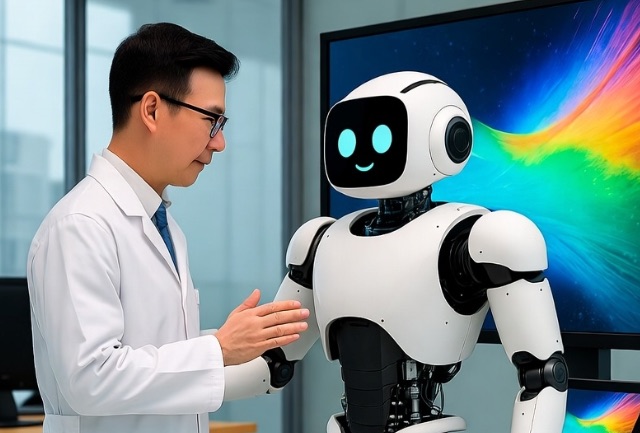
The landscape of automation is undergoing a seismic shift. Once confined to the structured and repetitive environments of factory floors, robots are increasingly entering more dynamic and human-centric spaces. A prime example of this evolution is the emergence of advanced warehouse robots like the X-Mover from Zhejiang Zhongli Machinery, a wheeled humanoid robot inspired by the efficient locomotion of a kangaroo [1]. Designed for material sorting, handling, and logistics, such robots represent a pinnacle of industrial automation, combining mobility, dexterity, and collaborative potential. This leap forward in warehouse efficiency naturally prompts a compelling question: Can these sophisticated workhorses of industry be adapted to serve in one of the most complex and unstructured environments in daily life—the domestic kitchen?
This analysis will explore the potential for X-Mover-style humanoid robots to transition from warehouse automation to kitchen assistance. It will delve into the current capabilities of both industrial and nascent domestic robots, dissect the immense technical challenges that separate these two domains, and project a realistic vision of future possibilities. By examining the chasm between the structured predictability of a warehouse and the dynamic, sensory-rich chaos of a home kitchen, we can better understand the technological, social, and economic hurdles that must be overcome to bring a true robotic culinary assistant into our homes.
1. The Current State of Automation: Warehouses and Kitchens
To understand the journey from warehouse to kitchen, it is essential to first appreciate the distinct automation paradigms currently operating in each domain. While both involve robotics, their objectives, environments, and technological underpinnings are worlds apart.
1.1 Warehouse Automation: A Realm of Structure and Efficiency
Modern warehouses are highly optimized ecosystems where robots perform tasks with superhuman speed and consistency. Humanoid robots like the X-Mover are designed to excel in these semi-structured settings. Their key features include:
- Efficient Mobility: A wheeled base, sometimes combined with dynamic balancing capabilities inspired by kangaroos, allows for rapid movement across flat, predictable surfaces [1] [2]. This is ideal for traversing long aisles and covering large floor areas.
- Task-Specific Manipulation: Grippers are specialized for industrial objects. X-Mover, for instance, utilizes magnetic and pneumatic grippers to handle screws, metal parts, and soft packaging. This type of manipulation is effective for known, uniform objects.
- Collaborative Systems: These robots are designed to work within a network of other automated systems, such as forklifts and material transporters, creating a seamless, human-free workflow.
- High Payload and Repetitiveness: The primary value of these robots lies in their ability to lift, sort, and transport items tirelessly, handling payloads and performing repetitive actions far beyond human endurance.
The success of warehouse robotics is rooted in environmental control. The objects are cataloged, the floor plan is mapped, and the tasks are repetitive. It is a world of efficiency through predictability, a stark contrast to the domestic kitchen.
1.2 Kitchen Automation: Specialized Tools and Emerging Assistants
Automation in the kitchen has, until now, largely taken the form of specialized, single-task appliances. From automated coffee makers and smart ovens to robotic fryers, these devices excel at performing one function perfectly [3]. However, the concept of a general-purpose robotic assistant is gaining significant traction.
The commercial food sector has been an early adopter. Robots like “Flippy” from Miso Robotics are already working in fast-food chains, expertly managing fry stations and improving efficiency and safety [4] [5]. Other systems, such as Hyper Robotics’ fully automated pizza restaurant in a container, showcase how automation can streamline the entire cooking process for specific cuisines [6]. The global kitchen robotics and automation market is projected to grow substantially, reaching an estimated USD 8.63 billion by 2032, driven by labor shortages and the demand for consistency [7] [8].
In the domestic sphere, the landscape is more nascent but equally ambitious. Companies are developing personal AI robots designed for a variety of home tasks, with 2025 anticipated as a significant year for home automation [9]. Products like the Aeolus Robot are marketed as all-in-one assistants capable of cleaning and fetching items with their robotic arms [10]. Similarly, Moley Robotics offers a luxury, fully integrated robotic kitchen with two dexterous arms designed to mimic the movements of a professional chef [11] [12]. These early examples signal a clear consumer appetite for more sophisticated home help, a trend supported by the rapid growth of the household robots market, which is driven by a desire for convenience and the rise of smart home ecosystems [13] [14].
2. The Great Divide: Bridging the Warehouse-to-Kitchen Gap
The transition of an X-Mover-style robot from a warehouse floor to a kitchen counter is not a simple matter of reprogramming. It involves overcoming fundamental challenges related to environment, manipulation, intelligence, and safety. The controlled physics of the warehouse gives way to the “squishy physics” of the kitchen, where objects are delicate, deformable, and diverse.
2.1 Environmental Complexity and Navigation
A warehouse is a robot’s playground: flat floors, wide aisles, and static obstacles. A home kitchen is an obstacle course. It is a dynamic, unstructured, and often cluttered space. A domestic robot must navigate around pets, children, misplaced chairs, and unexpected spills. While an X-Mover’s wheeled base is perfect for a warehouse, it may struggle with thresholds, rugs, and the tight confines of a typical kitchen. This necessitates more advanced navigation and perception systems capable of real-time adaptation to a constantly changing environment. The transition from a 2D map to 3D spatial awareness in a chaotic setting is a monumental leap.
2.2 The Dexterity Bottleneck: From Boxes to Berries
The most significant hurdle lies in manipulation. A warehouse robot’s grippers are designed for efficiency with a limited set of objects [15]. Kitchen tasks, however, require a level of dexterity that remains a grand challenge in robotics [16]. Consider the difference between grabbing a cardboard box and performing these common kitchen tasks:
- Delicate Handling: Picking a ripe tomato without bruising it, cracking an egg without shattering the shell, or gently folding flour into a batter.
- Tool Use: Safely wielding a sharp knife to chop vegetables of varying textures, using a spatula to flip a pancake, or whisking eggs to the right consistency.
- Force and Temperature Feedback: Stirring a thick stew, knowing when a piece of meat is properly seared, or handling a hot pan.
Human hands, with their numerous degrees of freedom and rich sensory feedback, perform these tasks intuitively [17]. Replicating this capability is at the forefront of robotics research. Companies like Sanctuary AI and Boston Dynamics are making strides in developing more dexterous, anthropomorphic hands, but these are still far from matching human ability [18] [19]. As robotics expert Rodney Brooks has noted, general-purpose dexterity has been an elusive goal for decades, with the simple parallel jaw gripper remaining the industry standard [20]. While new AI models like Google DeepMind’s ALOHA Unleashed show promise in teaching robots complex two-armed tasks, the gap between laboratory demonstrations and a reliable kitchen assistant is vast [21].
2.3 The Intelligence Leap: From Execution to Cognition
A warehouse robot follows explicit instructions: “pick box A from shelf B and move it to location C.” A kitchen assistant needs a far more sophisticated form of artificial intelligence. It must be able to:
- Interpret Ambiguous Commands: Understand instructions like “chop the onions finely” or “sauté until golden brown.”
- Recognize and Adapt to Variation: Identify hundreds of different ingredients in various states of ripeness or preparation. AI-powered vision systems are advancing, capable of sorting food by quality or detecting contaminants, but integrating this into a general-purpose robot is complex [22] [23].
- Learn and Generalize: Learn a new recipe from a video or by observing a human, and then adapt that recipe based on available ingredients or user preferences.
- Multi-Step Task Planning: Deconstruct a complex goal like “bake a cake” into a logical sequence of actions, from gathering ingredients to preheating the oven and mixing the batter.
This requires a shift from task execution to a form of robotic cognition, blending advanced perception, natural language processing, and complex decision-making.
3. Engineering a Domestic Solution: Technical Requirements for a Kitchen Humanoid
To successfully make the leap into the kitchen, a humanoid robot would require a radical redesign, incorporating technologies that address the unique demands of the domestic culinary environment.
3.1 Advanced Sensing and Perception
A kitchen robot cannot operate blind. It needs a rich, multi-modal sensory suite to perceive and interact with its environment.
- 3D Vision and Object Recognition: High-resolution cameras combined with deep learning algorithms are essential for identifying a vast array of foods, utensils, and appliances [24]. This system must be robust enough to handle variations in lighting, shape, and presentation.
- Tactile and Force Sensing: The robot’s hands and fingers must be equipped with sensors that provide feedback on pressure, texture, and temperature. This is crucial for gentle grasping, effective tool manipulation, and determining the state of food during cooking.
- Auditory and Olfactory Sensors: While less developed, the ability to hear a sizzle, a boil, or a timer, and even to “smell” if something is burning, would provide invaluable data for a truly autonomous kitchen assistant.
3.2 Food-Grade Design and Hygiene
Unlike its industrial counterpart, a kitchen robot is a food contact surface. This introduces stringent requirements for hygiene and safety. The robot must be constructed from food-grade materials, such as stainless steel, that are non-corrosive and easy to sanitize [25]. The design must eliminate crevices where food particles and bacteria can accumulate. Furthermore, the robot must adhere to strict protocols to prevent cross-contamination, such as cleaning its grippers between handling raw meat and fresh vegetables. These design principles are already being applied in commercial food processing robots and would need to be adapted for a multi-purpose domestic model [26]. The entire food safety plan of a household would need to be re-evaluated to incorporate the robot’s operation [27].
3.3 Safety and Human-Robot Interaction
Safety is the paramount concern when placing a powerful, potentially knife-wielding robot in a home [28]. An industrial robot often operates behind safety cages. A domestic robot must coexist safely with unpredictable humans. This requires:
- Advanced Collision Avoidance: The robot must be able to detect and react to moving people and objects instantly to prevent accidents.
- Fail-Safe Mechanisms: The robot must be designed to fail safely. For example, in the event of a power loss, it should not drop a hot pan or a sharp knife.
- Intuitive User Interface: Users must be able to communicate with the robot easily and naturally, whether through voice commands, a mobile app, or physical demonstration. The goal is to create a seamless interaction that builds trust and confidence [29].
4. The Future Kitchen: Possibilities and Projections
While the challenges are formidable, the trajectory of technological advancement suggests that the robotic kitchen assistant is a question of “when,” not “if.” The timeline for this transition can be envisioned in stages, moving from specialized assistants to fully integrated humanoid helpers.
4.1 Short-Term (3-5 Years): The Rise of Collaborative and Modular Robots
In the near future, we are likely to see an expansion of what already exists: more sophisticated, single-task robots and collaborative systems. This could include:
- Modular Robotic Arms: Instead of a full humanoid, consumers might install one or two robotic arms in their kitchen, perhaps mounted under cabinets or on a countertop. These could perform specific tasks like chopping, stirring, or loading a dishwasher. Solutions are already being designed to integrate with existing kitchen layouts, making them more accessible [30] [31].
- Enhanced “Cobots”: Robots designed to work alongside humans could take on the role of a “sous-chef,” handling laborious prep work like peeling potatoes or chopping vast quantities of vegetables, freeing up the human cook for more creative tasks.
- AI-Powered Smart Appliances: Kitchen appliances will become smarter and more interconnected. A smart refrigerator could communicate with a robotic arm to retrieve ingredients for a recipe selected on a smart display [3].
This phase will be defined by affordability and practicality, with the market for AI cooking robots expected to grow significantly [32].
4.2 Mid-Term (5-10 Years): The Emergence of General-Purpose Assistants
As technology matures and costs decrease, we will likely see the first generation of true general-purpose kitchen robots. These early models may resemble the wheeled humanoids seen in warehouses, but with significant adaptations for the home [33].
- Limited Task Versatility: These “Humanoid Version 0.5” robots might be able to perform a range of multi-step tasks, such as unloading groceries, brewing coffee, and preparing simple meals like salads or sandwiches.
- Learning from Demonstration: Users could teach the robot new tasks by physically guiding its arms or through video tutorials, leveraging advancements in AI and machine learning.
- Integration with Smart Homes: The robot would be a central node in the smart home ecosystem, coordinating with other devices to manage the kitchen environment seamlessly [34].
The period from 2028 to 2029 is predicted to be a key time for household integration, as robots transition from novelties to necessities [35].
4.3 Long-Term (10+ Years): The Fully Autonomous Humanoid Chef
The ultimate vision is a humanoid robot that can function as a fully autonomous kitchen assistant, capable of planning, preparing, and cleaning up after complex meals. Achieving this will require breakthroughs in several areas:
- Human-Level Dexterity: Robotic hands will need to achieve dexterity and sensitivity comparable to human hands.
- Advanced AI and Creativity: The robot’s AI will not only follow recipes but also improvise, adapt to dietary restrictions, and even create new dishes based on user preferences and available ingredients.
- Seamless Social Integration: The robot will be a trusted member of the household, interacting naturally with family members and adapting its behavior to the social context.
This long-term vision depends on continued innovation and significant cost reduction. Projections for Tesla’s “Optimus” robot suggest a future price point of $20,000 to $25,000, which could eventually make such technology accessible to a broader market [36].
5. Conclusion: From Industrial Workhorse to Domestic Partner
The journey of the humanoid robot from the structured confines of the warehouse to the dynamic heart of the home is one of the most exciting and challenging frontiers in robotics. The X-Mover, with its kangaroo-inspired efficiency, represents a significant achievement in industrial automation, but its direct application in the kitchen is unfeasible. The gap between handling uniform boxes and delicately preparing a meal is immense, spanning chasms of dexterity, environmental perception, artificial intelligence, and human-centric design.
Overcoming these challenges will require a fundamental reimagining of what a robot is and what it can do. It will demand innovations in soft robotics, multi-modal sensing, food-grade materials, and cognitive AI. The transition will be gradual, likely beginning with specialized modular systems that assist with tedious chores before evolving into the versatile, general-purpose humanoid assistants that science fiction has long promised.
Ultimately, the successful integration of a robotic chef into our kitchens will depend not only on technical prowess but also on consumer trust, affordability, and its ability to genuinely enhance our lives. While the vision of a robot effortlessly preparing a gourmet meal is still on the horizon, the rapid pace of technological advancement in both industrial and domestic robotics suggests that the future of cooking may indeed be automated. The industrial workhorse of today is laying the groundwork for the domestic partner of tomorrow, promising a future where our kitchens are smarter, our chores are lighter, and our time is freed up for more creative and fulfilling pursuits.
References
[1] CyberRobo on X. https://x.com/CyberRobooo/status/1982783429084344629
[2] Festo – BionicKangaroo (English). https://www.youtube.com/watch?v=mWiNlWk1Muw
[3] AI In Cooking: How It Changes The Culinary World. https://tastewise.io/blog/ai-in-cooking
[4] This $5,000 Cooking Robot SHOCKED the World with Its … – YouTube. https://www.youtube.com/watch?v=Uexur9rOxW4
[5] Kitchen AI & Automation | Maker of Flippy | Miso. https://misorobotics.com/
[6] Restaurant of the Future 2024 | Food Robots On The Rise – YouTube. https://www.youtube.com/watch?v=KQkmFZQ-2SA
[7] Robots in the Kitchen: How Automation Can Address 2025 … https://robochef.ai/blog/robots-in-the-kitchen
[8] Robots in the Kitchen: How Automation Can Address 2025 … https://robochef.ai/blog/robots-in-the-kitchen
[9] Personal AI Assistant Robot That Learns and Gets Smarter Over Time. https://www.youtube.com/watch?v=qRpOfKGbapk
[10] 10 Must-Have Home Robots in 2024 to Transform Your Living Space. https://www.theintelligraph.com/article/10-must-have-home-robots-in-2024-to-transform-your-living-space
[11] Moley Robotics – the world’s first fully robotic kitchen. https://www.moley.com/
[12] Future of Home Robots: AI2023 Roadmap & Innovations – Viso Suite. https://viso.ai/edge-ai/home-robots-stanfords-roadmap/
[13] Household Robots Market Size, Share | CAGR of 19%. https://market.us/report/household-robots-market/
[14] Robot Kitchen Market Report 2025 – Trends & Forecast. https://www.thebusinessresearchcompany.com/report/robot-kitchen-global-market-report
[15] State-of-the-art robotic grippers, grasping and control strategies, as … https://www.sciencedirect.com/science/article/abs/pii/S0168169920311030
[16] Humanoid robots: From concept to reality – McKinsey. https://www.mckinsey.com/industries/industrials-and-electronics/our-insights/humanoid-robots-crossing-the-chasm-from-concept-to-commercial-reality
[17] MOGrip: Gripper for multiobject grasping in pick-and-place tasks … https://www.science.org/doi/10.1126/scirobotics.ado3939
[18] Sanctuary AI Demonstrates In-Hand Manipulation Capabilities for … https://www.sanctuary.ai/blog/sanctuary-ai-demonstrates-in-hand-manipulation-capabilities-for-improved-general-purpose-robot-dexterity
[19] What’s in a humanoid hand? | Boston Dynamics – YouTube. https://www.youtube.com/watch?v=gS4rOqNDTBk&vl=en
[20] Why Today’s Humanoids Won’t Learn Dexterity – Rodney Brooks. https://rodneybrooks.com/why-todays-humanoids-wont-learn-dexterity/
[21] Our latest advances in robot dexterity – Google DeepMind. https://deepmind.google/discover/blog/advances-in-robot-dexterity/
[22] The Rise of Robotics in Food Processing – KnowHow Hub. https://knowhow.distrelec.com/food-and-beverages/the-rise-of-robotics-in-food-processing/
[23] Food Detection API That Sees What You Can’t. https://foodtech.folio3.com/solutions/ai-for-food/food-detection-api/
[24] AI Smart Scale: Weigh, Recognize, and Track Food … https://www.electromaker.io/blog/article/ai-smart-scale-weigh-recognize-and-track-food-nutrients-locally?srsltid=AfmBOopWjuKfFegOs53NQbRDoM0RM2uWJK9ZXqIUcJmUOEGlO3D_ZGBt
[25] Using Robots to Enhance Food Safety | Midwest Engineered Systems. https://www.mwes.com/let-robots-hygienically-handle-our-food-ensuring-safety-in-food-production/
[26] Standards for Robot-based Automation Systems – 3-A SSI. https://www.3-a.org/newsletter-article/standards-for-robot-based-automation-systems
[27] Next-Gen Hygiene: How Do Collaborative Robots Affect Food Safety … https://www.food-safety.com/articles/9673-next-gen-hygiene-how-do-collaborative-robots-affect-food-safety-programs
[28] 8 Robotics Trends Transforming Industries in 2025 – StudioRed. https://www.studiored.com/blog/eng/robotics-trends/
[29] Humanoid Robots: Abilities, Challenges, and the Road Ahead. https://www.whalesbot.ai/blog/humanoid-robots-abilities-challenges-and-the-road-ahead
[30] Restaurant Robots: Automating Your Kitchen in 2024. https://therestaurantwarehouse.com/blogs/restaurant-equipment/kitchen-robots-guide?srsltid=AfmBOoqMgI2W0pYQo7TgQeLszNiP4M3GVgBG4CuPVevSQw_XFrne083L
[31] Robots in the Kitchen: How Automation Can Address 2025 … https://robochef.ai/blog/robots-in-the-kitchen
[32] AI Cooking Robot Market Outlook 2025-2032. https://www.intelmarketresearch.com/consumer-goods/5900/ai-cooking-robot-2025-2032-514
[33] [PDF] Humanoid robotics, 2025 – DIGITIMES Asia. https://www.digitimes.com/reports/ai/2025_robots/assets/humanoid-robotics-2025.pdf
[34] Cooking Robot Market Size, Share, Trends & Insights Report, 2035. https://www.rootsanalysis.com/cooking-robot-market
[35] The Robotics Timeline: 2025 to 2035. https://robophil.com/insights/the-robotics-timeline-2025-to-2035/
[36] A humanoid robot to help you around the house | REUTERS. https://www.youtube.com/watch?v=OCYPR8s77k8