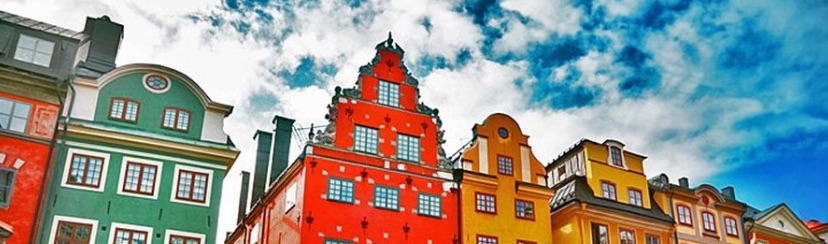
A Nordic-born movement challenges modernist monotony, advocating for human-centered design and public participation in shaping our cities.
69+ Sources
- 1.Key Insights into the Architectural Rebellion
- 2.Unpacking the Core of the Architectural Rebellion
- 3.Grassroots Mobilization and Impact
- 4.The Nuance of Architectural Evolution
- 5.Comparative Analysis of Architectural Philosophies
- 6.The Norwegian Uprising Against Ugly Architecture
- 7.Frequently Asked Questions
- 8.Conclusion
- 9.Recommended Further Reading
- 10.Referenced Search Results
Key Insights into the Architectural Rebellion
- Origins and Expansion: The Architectural Rebellion, or Architectural Uprising, began in Sweden in 2014 as an online community and has rapidly expanded across Nordic countries and into wider Europe, gaining significant grassroots support.
- Critique of Post-War Modernism: The movement fundamentally challenges the prevailing post-war modernist architecture, which it views as overly functional, monotonous, and aesthetically sterile, resulting in “soulless blocks and sterile public spaces.”
- Advocacy for Human-Centered Design: It champions a return to classical, traditional, and human-centered design principles, emphasizing detail, historical context, beauty, and a sense of belonging in urban environments.
The user’s query accurately describes a significant grassroots movement known as the Architectural Rebellion or Architectural Uprising, which originated in Sweden in 2014. This movement has since expanded across Scandinavia and into other European nations, including Norway, Denmark, Finland, Germany, the Netherlands, Poland, the Baltics, the UK, Estonia, and Italy, even reaching as far as Brazil and the western United States. At its core, the Architectural Rebellion is a response to widespread dissatisfaction with the prevalent modernist architectural styles that have shaped many post-war urban landscapes, particularly in housing and public infrastructure.
Unpacking the Core of the Architectural Rebellion
The Architectural Rebellion is far more than a simple aesthetic preference; it represents a deep ideological critique of modern urban planning and design. Proponents of the movement argue that much of post-war modernist architecture, while aiming for functionality and efficiency, has inadvertently created alienating and uninspiring environments.
The Critique of Post-War Modernism
The movement’s central critique targets post-war modernist architecture, which gained prominence due to the urgent need for housing and reconstruction in Europe after World War II. While modernist approaches offered speed and affordability through industrialized methods, critics argue that they prioritized uniformity, efficiency, and functionality over beauty, identity, and tradition. This often resulted in large-scale concrete buildings, repetitive blocks, and minimalist designs that, in the eyes of the Architectural Rebellion, are “soulless” and contribute to the “uglification” of cities.
The movement acknowledges the historical context that influenced post-war modernism, including the need for mass housing and the ideals of social democracy in the Nordics, which focused on creating affordable and egalitarian urban spaces. However, it contests the notion that such designs are inherently superior or more progressive, particularly when they lead to environments that alienate residents.
The Ideological Underpinnings of Modernism’s Spread
While the user’s query mentions “communist-style architecture,” it is crucial to approach this characterization with nuance. Modernism was indeed adopted by socialist states in Eastern Europe, where it aligned with collective needs and the goal of state-driven equality, leading to expansive housing estates. However, it was also embraced by capitalist democracies and social-democratic welfare states in Western and Nordic Europe for reasons such as addressing housing shortages and achieving social goals like standardized, healthy housing. Therefore, labeling all post-war modernism as simply “communist-style” is an oversimplification.
Even within modernism, there was diversity. Nordic modernism, for instance, often maintained a “continuing modernism” that was attentive to climate, materials, and social context, with architects like Alvar Aalto and Arne Jacobsen blending functionalism with warmth and craftsmanship.
Advocating for Human-Centered and Traditional Design
In contrast to the perceived shortcomings of modernist architecture, the Architectural Rebellion advocates for a return to classical, traditional, and human-centered design. This includes an emphasis on:
- Detail and Ornamentation: Incorporating intricate details and decorative elements that were often stripped away in modernist designs.
- Historical Context: Designing buildings that respect and reflect the historical and cultural identity of a place, fostering a sense of continuity and belonging.
- Human Scale: Creating environments that are proportionate to human experience, avoiding the overwhelming scale of some modernist projects.
- Local Vernacular: Drawing inspiration from regional architectural traditions and materials, contributing to a unique sense of place.

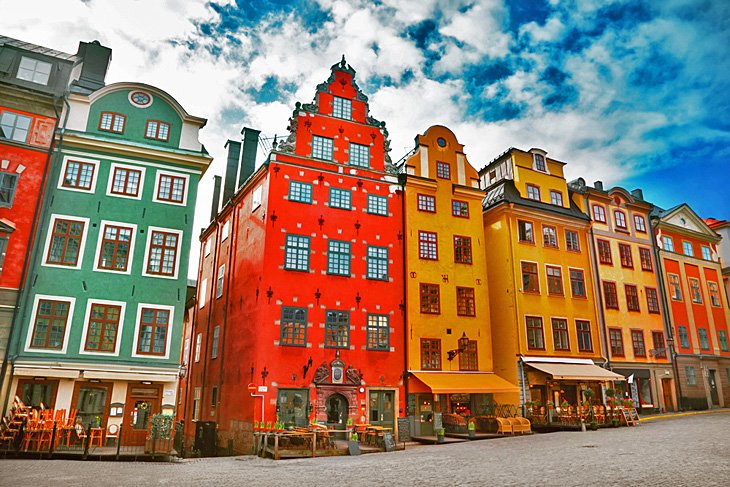
Gamla Stan, Stockholm, showcasing traditional European architecture.
The Vision for Future Cities
The movement envisions cities where buildings contribute to civic pride and personal well-being, moving away from environments that are perceived as bland, alienating, and depressing. This includes promoting Nordic Classicism—a style popular in the early 20th century that blended simplicity with classical elements—and embracing vernacular heritage.
Grassroots Mobilization and Impact
What started as a Facebook group, Arkitekturupproret, in Sweden in 2014, has blossomed into a powerful cultural counter-movement. Its growth is largely fueled by grassroots activism and widespread public engagement.
Methods of Activism
The Architectural Rebellion utilizes various strategies to advance its agenda:
- Social Media: Leveraging online platforms to organize, share critiques, and disseminate their vision for better architecture.
- Public Polls: Conducting popular polls to identify the “ugliest” and “most beautiful” buildings, thereby giving a voice to public sentiment and highlighting perceived architectural failures. For example, Oslo’s Munch Museum was voted Norway’s “ugliest building” in 2021, a direct outcome of such public engagement.
- Advocacy and Media Engagement: Campaigning for policy changes, participating in public debates, and attracting media attention to their cause.
- Influencing Design Revisions: In some notable instances, public pushback inspired by the movement has led to revisions of proposed architectural projects, shifting designs towards more traditional or contextual styles. For example, a series of angular high-rises in Norway, Risørholmen, was reportedly revised into traditional-inspired white houses with red roofs.

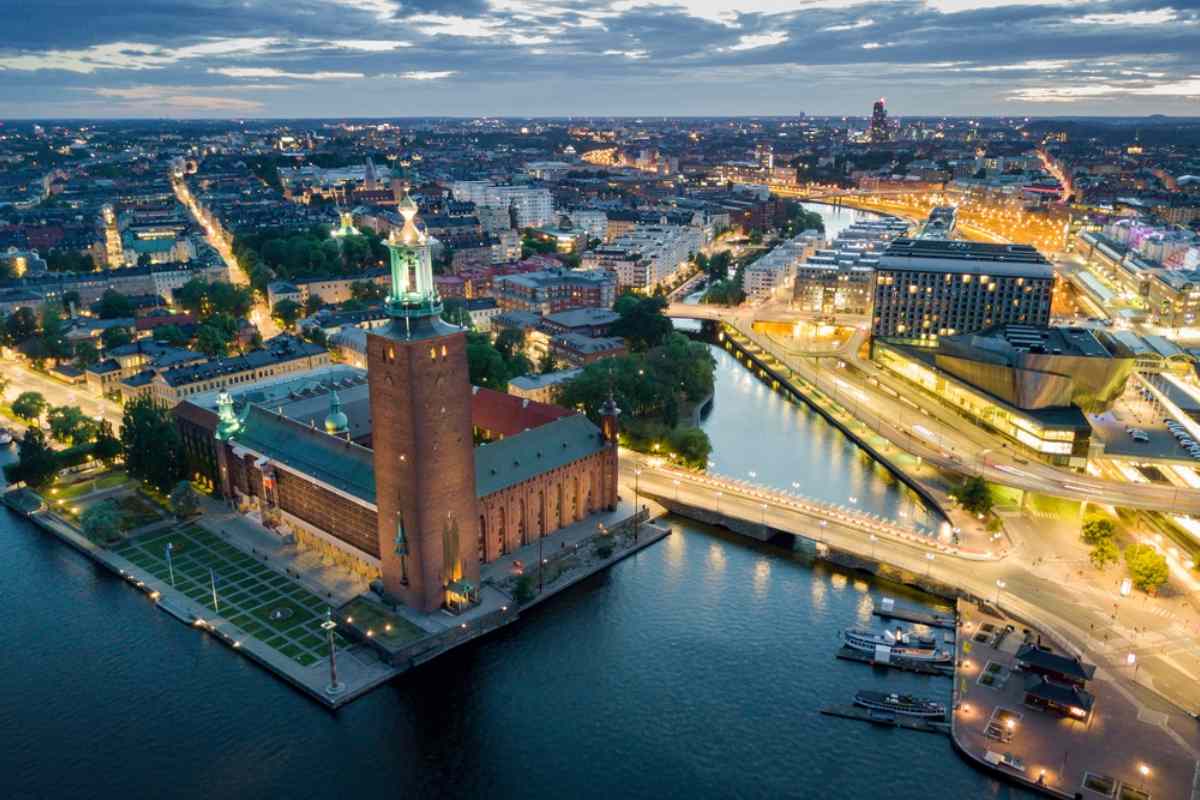
Stockholm City Hall, an example of National Romanticism with classical influences.
A Democratic Imperative
A core tenet of the Architectural Rebellion is its democratic nature. It questions why citizens should be compelled to live in environments they find displeasing, imposed by planners and elites in the name of “progress.” The movement champions the idea that people should have a significant say in shaping their built environment, reflecting their cultural identities and preferences rather than solely the visions of a small architectural elite. This aligns with a broader societal push for democratic participation in urban planning.
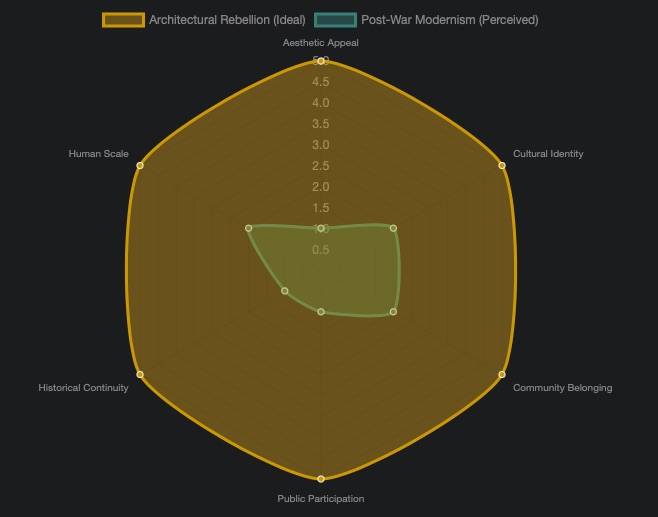
The radar chart above illustrates a perceived comparison between the ideals championed by the Architectural Rebellion and the perceived characteristics of post-war modernist architecture. The Rebellion aims for high scores across all aspects of human-centered design, while modernism, in the movement’s view, often falls short in these areas.
The Nuance of Architectural Evolution
While the Architectural Rebellion makes a compelling case for public engagement and aesthetic value, it’s also important to consider the broader context and complexities of architectural development.
Beyond Aesthetics: Contributing Factors to Urban Form
The “ugliness” or monotony often attributed to modernist buildings isn’t solely a result of ideological purity or aesthetic preference. Factors such as cost engineering, zoning regulations, car-centric urban planning, energy codes, and procurement processes all play significant roles in shaping the built environment. These practical considerations can sometimes override purely aesthetic or traditional design intentions.
Moreover, high-quality urban environments often benefit from a blend of well-executed contemporary architecture and thoughtful traditional infill, alongside fine-grained street networks and well-designed public spaces. A blanket rejection of all modernism might overlook innovative and contextually sensitive contemporary designs that contribute positively to cities.
The Ongoing Debate and Future Directions
The Architectural Rebellion has undeniably reshaped debates in media, academia, and city halls regarding authenticity, reconstruction, and the balance between heritage, sustainability, and contemporary expression. There is increasing demand for public consultations, rigorous design reviews, and competitions that seek contextual and human-scaled proposals.
The movement’s success signals a growing market demand for traditionally styled or early 20th-century neighborhoods, which often command higher prices. This has prompted some developers to consider more contextual and traditional façades that resonate better with public taste and sell more readily.
mindmap
root[“Architectural Rebellion”]
origins[“Started in Sweden 2014”]
expansion[“Spread across Nordic countries & Europe”]
grassroots[“Online community Arkitekturupproret”]
core_critique[“Critique of Post-War Modernism”]
monotony[“Monotonous, concrete-dominated cityscapes”]
soulless[“Soulless blocks & sterile public spaces”]
alienating[“Alienating rather than inspiring”]
ideology_critique[“Influenced by collectivist & socialist ideals”]
function_over_beauty[“Functionality over beauty”]
efficiency_over_identity[“Efficiency over identity”]
uniformity_over_tradition[“Uniformity over tradition”]
advocacy[“Advocacy for Classical & Human-Centered Design”]
detail[“Buildings with detail”]
history[“Incorporating history”]
belonging[“Sense of belonging”]
public_preferences[“Reflecting public preferences”]
democratic_movement[“Democratic Movement”]
public_voice[“Challenges elite-imposed ‘progress'”]
choice[“People should not be forced to live in ‘ugly’ environments”]
impact[“Impact & Outcomes”]
public_polls[“‘Ugliest’ & ‘most beautiful’ building polls”]
project_revisions[“Influenced redesigns towards traditional styles”]
reshaping_debates[“Cultural counter-movement reshaping debates”]
nuance[“Nuance & Broader Context”]
modernism_diversity[“Modernism not monolithically ‘communist-style'”]
other_factors[“Cost, zoning, planning also shape outcomes”]
blend_architecture[“Value in mixing contemporary & traditional”]

This mindmap visually summarizes the key aspects of the Architectural Rebellion, from its origins and core critiques to its advocacy, democratic nature, and broader impact.
Comparative Analysis of Architectural Philosophies
To further contextualize the Architectural Rebellion, it’s beneficial to compare the philosophies it champions against the modernist approach it critiques.
| Feature | Architectural Rebellion’s Approach | Post-War Modernist Approach (as critiqued) |
|---|---|---|
| Primary Goal | Beauty, identity, sense of belonging, human well-being | Functionality, efficiency, solving housing shortages |
| Aesthetic Emphasis | Classical, traditional, detailed, ornamented, contextual | Minimalist, geometric, uniform, concrete, glass, steel |
| Relationship to History | Respects and integrates historical motifs and local heritage | Often a break from historical styles, forward-looking |
| Community Impact | Fosters civic pride, cultural identity, and social cohesion | Perceived as alienating, monotonous, leading to “soulless” spaces |
| Decision-Making | Democratic, public participation, bottom-up preferences | Often top-down, driven by planners, architects, and experts |
| Materiality | Diverse, often natural materials, craftsmanship emphasized | Standardized, industrial materials like concrete, steel, prefabrication |
This table highlights the contrasting philosophies between the Architectural Rebellion’s ideals and the characteristics of post-war modernism that it opposes.
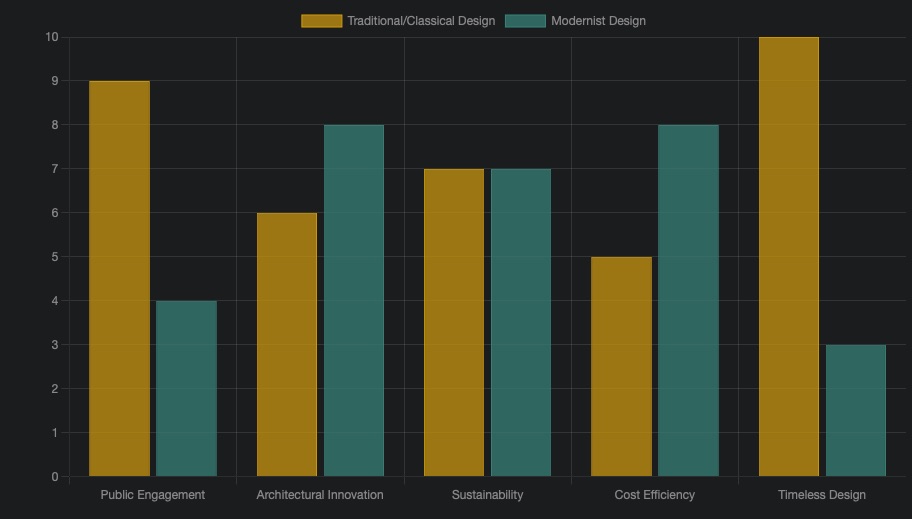
This bar chart provides an opinionated analysis of how traditional/classical design and modernist design might rate on various aspects relevant to urban development. It suggests that while modernism might excel in cost efficiency and innovation, traditional design is perceived to score higher in public engagement and timelessness, reflecting the core arguments of the Architectural Rebellion.
The Norwegian Uprising Against Ugly Architecture
This video features an interview discussing the Norwegian Architecture Uprising, its rapid growth, and its impact on the country’s architectural landscape.
The embedded video provides a direct insight into the Norwegian segment of the Architectural Rebellion, with Saher Sourouri discussing its explosive growth. This interview is particularly relevant as it elaborates on the specific context and impact of the movement within Norway, where public discontent has been notably vocal, leading to buildings like Oslo’s Munch Museum being voted “ugliest.” The video underscores the movement’s local manifestations and its success in mobilizing public opinion against modernist structures. It demonstrates how a global architectural debate finds strong resonance in national contexts, transforming theoretical arguments into tangible local actions and policy pressures.
Frequently Asked Questions
What is the Architectural Rebellion?
The Architectural Rebellion is a grassroots movement that started in Sweden in 2014, advocating for a return to classical, traditional, and human-centered architectural design in response to what it perceives as the monotonous and alienating nature of much post-war modernist architecture.
Where did the Architectural Rebellion originate and spread?
It originated in Sweden as the Facebook group Arkitekturupproret in 2014 and has since spread significantly across Nordic countries (Norway, Denmark, Finland) and into other European nations, including Germany, the UK, and Estonia, with global chapters as well.
What are the main criticisms of post-war modernism by the movement?
The movement criticizes post-war modernism for prioritizing functionality and efficiency over beauty and identity, leading to “soulless blocks,” “sterile public spaces,” and an overall “uglification” of cities. It links these characteristics to the influence of collectivist and socialist ideals in architecture.
What kind of architecture does the movement advocate for?
It advocates for buildings with detail, history, and a sense of belonging, promoting classical, traditional, and human-scaled designs that reflect local cultural identities and public preferences.
Is it accurate to call all post-war modernist architecture “communist-style”?
While modernist architecture was adopted in Eastern European socialist states, it was also widely embraced by Western democracies and social-democratic countries for various reasons, including addressing housing shortages. Therefore, characterizing all post-war modernism as “communist-style” is an oversimplification and lacks full historical nuance.
Conclusion
The Architectural Rebellion represents a powerful and evolving public discourse on the future of our urban environments. Born from a desire for beauty, identity, and democratic participation in design, it challenges the long-standing dominance of modernist architectural principles. While its critiques of post-war modernism can sometimes be broad, the movement effectively highlights the importance of human experience, historical continuity, and aesthetic appeal in the built environment. Its rapid growth and tangible impact in influencing design decisions underscore a broader societal yearning for cities that are not only functional but also inspiring, meaningful, and reflective of the communities they serve. As cities continue to evolve, the Architectural Rebellion ensures that the conversation around what constitutes “good” architecture remains vibrant, inclusive, and deeply connected to the people who inhabit these spaces.
Recommended Further Reading
- [History of post-war modernism in Nordic countries](/?query=History of post-war modernism in Nordic countries)
- [Impact of public opinion on urban planning](/?query=Impact of public opinion on urban planning)
- [Classical versus modernist architectural principles](/?query=Classical versus modernist architectural principles)
- [Grassroots movements influencing architectural trends](/?query=Grassroots movements influencing architectural trends)
Referenced Search Results
en.wikipedia.org
The Architectural Uprising – Wikipedia
bloomberg.com
A Nordic Revolt Against ‘Ugly’ Modern Architecture – Bloomberg
architecturaluprising.com
THE ARCHITECTURAL UPRISING – A people’s movement against the continued uglification of our cities
express.co.uk
Norway rebels at country’s ‘unbelievably ugly’ new buildings – Express
fiveable.me
Postwar Modernism: Global Spread and Criticism – Fiveable
architexturez.net
A Nordic Revolt Against ‘Ugly’ Modern Architecture | Aζ South … – Architexturez.net
planetware.com
Tourist Attractions in Sweden | PlanetWare
campervansweden.com
Exploring Swedish Architecture: Iconic Designs & Innovations – Campervan Sweden
youtube.com
The Norwegian Uprising Against Ugly Architecture – Interview … – YouTube
youtube.com
Eric Norin on how the Architecture Uprising Movement is … – YouTube
newrepublic.com
Architecture’s Rebellion at the 2014 Venice Biennale | The New Republic
d-nb.info
[PDF] Architecture as a Document of Historical Change: Three Examples …
ribaj.com
How protest architecture links civil resistance and our environment | RIBAJ
re-thinkingthefuture.com
An overview of Nordic Classicism
allgronn.org
The Architecture Uprising in Scandinavia and Beyond – Allgrønn
lossi36.com
(De)Politicization of an era: Architectural heritage in Central and …
reddit.com
r/ArchitecturalRevival on Reddit: A Nordic Revolt Against ‘Ugly’ …
scandinaviastandard.com
Scandinavian Design: Everything You Need to Know
fr.wikipedia.org
Rébellion architecturale — Wikipédia
en.m.wikipedia.org
Fascist architecture – Wikipedia
matthewlodge.substack.com
It’s Time for an (Architectural) Uprising
designindex.org
Scandinavian design – brief history of Scandinavian design – Definitions – designindex
pragmatika.media
reddit.com
tandfonline.com
Hans Döllgast, post-war reconstruction and modern architecture
architecture-history.org
en.wikipedia.org
reddit.com
r/architecture on Reddit: Aesthetics, neoclassical architecture …
rugandkilim.com
Scandinavian Design and its Connection to Art Deco and Jugendstil …
en.wikipedia.org
barebase.in
Scandinavian: The Evolution Of A Universal Design Style – Barebase
en.wikipedia.org
Architecture of Norway – Wikipedia
architecture-history.org
architecturaluprising.com
Architektur-Rebellion, Author at THE ARCHITECTURAL UPRISING
en.wikipedia.org
visitnorway.com
scandi.co.uk
Scandinavian design: the origins of the Scandi style – SCANDI
scandinaviandesign.com
Leading Source for Nordic Design News – Scandinaviandesign.com
en.wikipedia.org
sustainable9.com
Scandinavian Architecture: The Ultimate Guide | Sustainable9
classicist.org
Neoclassicism of the North – Institute of Classical Architecture & Art
cyclinguk.org
think.nd.edu
The Architectural Uprising – ThinkND
en.wikipedia.org
en.wikipedia.org
en.wikipedia.org
archividelpresente.fondazionefeltrinelli.it
Extinction Rebellion – Archivi del Presente – Fondazione Feltrinelli
en.wikipedia.org
jstor.org
Critical Perspectives on Postwar Modern Housing
eprints.whiterose.ac.uk
perception of architectural heritage and cities of postwar …
nordics.info
Nordic architecture: a continuing modernism, post-war to 2000
architecturaldigest.com
How Scandinavian Modern Design Took the World by Storm
online.ucpress.edu
The Cultural Center: Architecture as Cultural Policy in Postwar Europe
archdaily.com
colvilleandersen.medium.com
From Bauhaus to Backlash: The Return of Anti-Modernism
smashingmagazine.com
The Story Of Scandinavian Design: Combining Function and Aesthetics — Smashing Magazine
reddit.com
design-is-fine.org
britannica.com
Western architecture – Postwar, Modernism, Brutalism – Britannica
sofx.com
A Nordic Revolt Against Ugly Modern Architecture – SOFX
en.wikipedia.org
arkitekturupproret.se
About (English) – Arkitekturupproret
domusweb.it
Brutalism and post-punk: a story of architecture and rebellion – Domus
architecturaluprising.com
About – What is The Architectural Uprising? – THE ARCHITECTURAL UPRISING
architecturaluprising.com
List of All Architectural Uprising Branches – THE ARCHITECTURAL UPRISING
nytimes.com
The 25 Most Significant Works of Postwar Architecture
larseneriksen.com
Scandinavian Design: The Golden Age to Hygge – larsen & eriksen
gessato.com
muse.jhu.edu
a social critique of the large-scale modern housing project
en.wikipedia.org
researchgate.net
A Critique on Authenticity and Integrity in Reconstruction
reddit.com
r/BalticStates on Reddit: Architectural Uprising in the Baltics: Lithuania
en.wikipedia.org
Last updated September 29, 2025