

The principles of metabolic health, the pervasive impact of insulin resistance, and practical strategies for reclaiming vitality.
50+ Sources
- Key Insights into Metabolic Health
- The Pervasive Reach of Insulin Resistance
- Dr. Bikman’s Foundational Principles
- Practical Strategies for Reversing Insulin Resistance
- Opinionated Assessment of Metabolic Factors
- Visualizing Core Concepts of Metabolic Dysfunction
- Books and Media Presence
- Addressing Criticisms and Nuances
- Comparative Analysis of Metabolic Factors
- Summary of Dr. Bikman’s Contributions
- Frequently Asked Questions
- Conclusion
- Recommended Further Exploration
- Referenced Search Results
Key Insights into Metabolic Health
- Insulin Resistance as a Root Cause: Dr. Benjamin Bikman posits that insulin resistance is not merely a symptom but a fundamental underlying driver of a wide array of chronic diseases, including obesity, type 2 diabetes, heart disease, Alzheimer’s, and even reproductive issues.
- Dietary Influence on Insulin Levels: His work heavily emphasizes the critical role of dietary choices in managing insulin levels. He advocates for reducing carbohydrate intake and increasing protein and healthy fats to maintain lower insulin, thereby promoting metabolic health.
- Practical Strategies for Reversal: Dr. Bikman provides actionable, evidence-based strategies for reversing insulin resistance, focusing on dietary modifications, regular monitoring of insulin levels, and incorporating lifestyle adjustments like cold exposure.
Dr. Benjamin Bikman, a distinguished professor of Cell Biology and Physiology at Brigham Young University, is a prominent figure in the field of metabolic science. His extensive research and publications illuminate the critical role of insulin and its dysregulation, particularly insulin resistance, in the development and progression of numerous chronic health conditions. With a Ph.D. in Bioenergetics and a postdoctoral fellowship in metabolic disorders, Dr. Bikman’s academic and scientific background underpins his influential perspective on optimizing human health through metabolic control.
His core philosophy revolves around the concept that insulin resistance, a state where cells become less responsive to insulin, is an insidious epidemic that silently fuels many of the prevalent diseases of the modern era. This resistance, he argues, is primarily driven by consistently elevated insulin levels, often a direct consequence of dietary patterns rich in carbohydrates. By understanding and addressing this fundamental issue, individuals can embark on a path to better health, transcending conventional approaches that often focus on symptomatic treatment rather than root cause resolution.
The Pervasive Reach of Insulin Resistance
Dr. Bikman’s work extends beyond the commonly recognized link between insulin resistance and conditions like obesity and type 2 diabetes. He meticulously connects this metabolic dysfunction to a broader spectrum of health issues, revealing its far-reaching impact on various physiological systems.
Insulin’s Central Role in Chronic Diseases
Obesity and Type 2 Diabetes: The Obvious Connection
At the forefront of Dr. Bikman’s arguments is the undeniable link between insulin resistance, obesity, and type 2 diabetes. He explains that when insulin levels are chronically high due to excessive carbohydrate consumption, fat cells are signaled to store energy and are inhibited from releasing it. This leads to fat accumulation and, over time, the body’s cells become increasingly resistant to insulin’s signals, necessitating even higher insulin production, creating a vicious cycle that culminates in type 2 diabetes.
Heart Disease and Alzheimer’s: Unveiling the Hidden Links
Beyond metabolic disorders, Dr. Bikman highlights insulin resistance as a significant contributor to cardiovascular disease and neurodegenerative conditions, notably Alzheimer’s. He often refers to Alzheimer’s as “type 3 diabetes” due to the profound impact of impaired insulin signaling on brain health and function. Chronic high insulin levels can lead to inflammation and oxidative stress, damaging blood vessels and brain cells, thereby increasing the risk for these debilitating conditions.
Reproductive Health and Beyond
The influence of insulin resistance extends even to reproductive health, with conditions like Polycystic Ovary Syndrome (PCOS) being strongly associated with underlying insulin dysregulation. Dr. Bikman also discusses potential benefits of addressing insulin resistance, particularly through ketogenic diets, for conditions like migraines and multiple sclerosis, by improving cellular energy and reducing inflammation.
Dr. Bikman’s Foundational Principles
Dr. Bikman’s teachings are rooted in clearly defined principles that offer a paradigm shift in how metabolic health is approached. These principles emphasize the body’s natural capacity for healing when provided with the correct nutritional signals.
The Hormonal Hierarchy of Metabolism
Central to Dr. Bikman’s understanding of metabolism is the concept of insulin as the primary hormone governing fat storage and utilization. He argues that controlling insulin is paramount to achieving metabolic health. When insulin levels are kept consistently low, the body is naturally prompted to access its fat stores for energy, leading to weight loss and improved metabolic function. This perspective challenges the conventional calorie-counting approach, shifting the focus to hormonal regulation.
Dietary Cornerstones for Metabolic Health
Reducing Carbohydrate Intake
Dr. Bikman strongly advocates for a significant reduction in dietary carbohydrates. He identifies excessive carbohydrates as the primary dietary culprit behind elevated insulin levels and subsequent insulin resistance. By minimizing glucose spikes, the body can maintain lower, more stable insulin levels, fostering a state where fat burning is prioritized.
Prioritizing Protein and Healthy Fats
In contrast to carbohydrates, protein and healthy fats are emphasized as crucial macronutrients that promote satiety and provide sustained energy without triggering significant insulin responses. Dr. Bikman suggests that diets rich in these components can effectively lower insulin, shrink fat cells, and improve overall metabolic resilience. He stresses the importance of adequate protein for muscle maintenance and satiety, and healthy fats for cellular function and energy.
Practical Strategies for Reversing Insulin Resistance
Dr. Bikman provides clear, actionable steps that individuals can take to reverse insulin resistance and improve their metabolic health. These strategies integrate dietary changes with lifestyle modifications.
Dietary Interventions
Low-Carb, Moderate-Protein, High-Fat Approach
The cornerstone of Dr. Bikman’s practical advice is the adoption of a dietary pattern that is low in carbohydrates, moderate in protein, and rich in healthy fats. This approach, often aligned with ketogenic principles, aims to keep insulin levels consistently low, allowing the body to transition into a state of fat-burning. Examples of such diets prioritize whole, unprocessed foods over refined grains, sugars, and industrial seed oils.
Focus on Whole Foods and Avoiding Processed Options
He stresses the importance of consuming whole, unprocessed foods. This means emphasizing nutrient-dense animal proteins, non-starchy vegetables, and healthy fats while strictly limiting highly processed foods, sugary beverages, and refined carbohydrates, which are metabolic disruptors.
Monitoring and Lifestyle Adjustments
Beyond Glucose: The Importance of Insulin Testing
Dr. Bikman highlights that traditional glucose monitoring alone is insufficient for assessing metabolic health. He advocates for testing fasting insulin levels as a more accurate indicator of insulin resistance, allowing for earlier detection and intervention. This proactive approach empowers individuals to address metabolic dysfunction before it escalates into full-blown chronic disease.
Incorporating Lifestyle Factors
Beyond diet, Dr. Bikman discusses the benefits of lifestyle factors such as regular physical activity, adequate sleep, and stress management. He also touches upon the emerging interest in practices like cold exposure (e.g., cold plunges) as a means to enhance mitochondrial health and metabolic function. These holistic approaches contribute synergistically to improving insulin sensitivity.
Opinionated Assessment of Metabolic Factors
Based on the comprehensive insights from Dr. Benjamin Bikman, here is an opinionated assessment of various metabolic factors and their perceived influence on overall health. This radar chart visualizes the relative importance and impact of these elements as emphasized in his work.
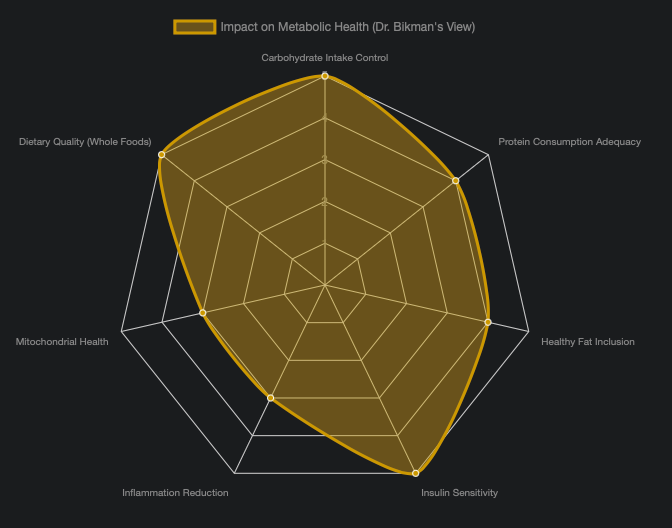
This radar chart illustrates the perceived significance of various factors in metabolic health, with a strong emphasis on carbohydrate control and insulin sensitivity as paramount. Adequate protein and healthy fats also play crucial roles, supporting the body’s metabolic functions and overall well-being. Inflammation reduction and mitochondrial health, while important, are often viewed as downstream effects or contributors to the primary issue of insulin resistance.
Visualizing Core Concepts of Metabolic Dysfunction
To further illustrate the interconnectedness of factors contributing to metabolic dysfunction as articulated by Dr. Bikman, the following mindmap provides a visual hierarchy of concepts.
mindmap
root[“Metabolic Dysfunction: Dr. Bikman’s Perspective”]
Insulin_Resistance[“Insulin Resistance”]
Chronic_High_Insulin[“Chronic High Insulin”]
Excess_Carbohydrates[“Excess Carbohydrates”]
Frequent_Eating[“Frequent Eating”]
Cellular_Dysfunction[“Cellular Dysfunction”]
Fat_Storage_Promotion[“Fat Storage Promotion”]
Impaired_Fat_Burning[“Impaired Fat Burning”]
Associated_Diseases[“Associated Diseases”]
Obesity[“Obesity”]
Type_2_Diabetes[“Type 2 Diabetes”]
Heart_Disease[“Heart Disease”]
Alzheimers[“Alzheimer’s (Type 3 Diabetes)”]
PCOS[“PCOS”]
Migraines[“Migraines”]
MS[“Multiple Sclerosis”]
Solutions[“Solutions: Reversing Insulin Resistance”]
Dietary_Changes[“Dietary Changes”]
Low_Carb[“Low Carb Intake”]
Moderate_Protein[“Moderate Protein”]
Healthy_Fats[“Healthy Fats”]
Whole_Foods[“Whole, Unprocessed Foods”]
Lifestyle_Adjustments[“Lifestyle Adjustments”]
Exercise[“Regular Exercise”]
Sleep[“Adequate Sleep”]
Stress_Management[“Stress Management”]
Cold_Exposure[“Cold Exposure”]
Monitoring[“Monitoring”]
Fasting_Insulin[“Fasting Insulin Levels”]
Glucose_Levels[“Glucose Levels (Secondary)”]
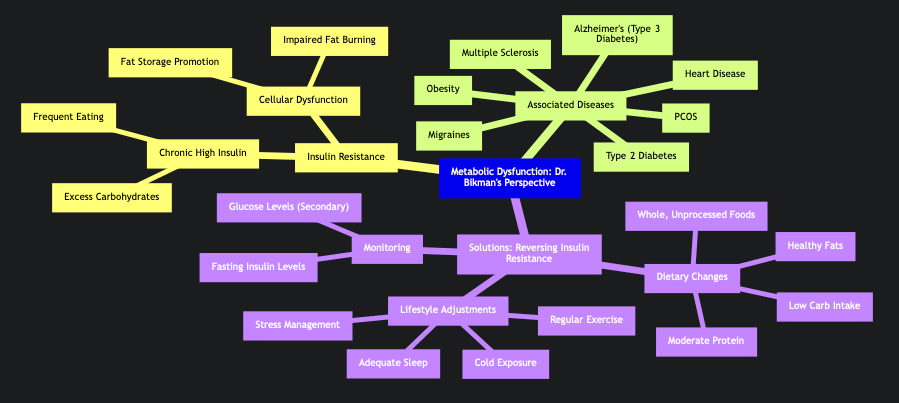
This mindmap distills Dr. Bikman’s central thesis, showing insulin resistance as the root, branching out to the chronic diseases it fuels, and then detailing the multi-faceted solutions involving dietary and lifestyle changes.
Books and Media Presence
Dr. Bikman has effectively disseminated his insights through various platforms, making complex scientific concepts accessible to a wider audience. His books serve as comprehensive guides, while his media appearances and podcast offer ongoing education and practical advice.
Influential Publications
“Why We Get Sick”
His seminal work, “Why We Get Sick: The Hidden Epidemic at the Root of Most Chronic Disease—and How to Fight It,” delves deep into the science of insulin resistance. The book meticulously explains how this metabolic dysfunction underlies numerous chronic conditions and provides a clear roadmap for individuals to understand and combat it.
“How Not to Get Sick”
As a practical companion, “How Not to Get Sick: A Cookbook and Guide to Prevent and Reverse Insulin Resistance, Lose Weight, and Fight Chronic Disease,” co-authored with Diana Keuilian, offers tangible dietary strategies and recipes. This book translates the scientific principles into everyday meal planning, making it easier for readers to implement his recommended dietary changes.
Engaging Through Various Media
Dr. Bikman extends his reach through his popular podcast, “The Metabolic Classroom,” where he discusses various aspects of metabolism, energy use, and the science behind chronic diseases. He is also a frequent guest on podcasts and a speaker at conferences, sharing his expertise on insulin resistance, ketogenic diets, and overall metabolic health.
Below is a video where Dr. Bikman discusses the critical connection between seed oils and insulin resistance, highlighting dietary factors that often go unnoticed but contribute significantly to metabolic dysfunction. This video serves as an excellent deep dive into specific dietary components that impact insulin sensitivity.
Dr. Ben Bikman on Seed Oils and Insulin Resistance: What the Science Says.
Addressing Criticisms and Nuances
While Dr. Bikman’s work has gained significant traction and helped many, it’s also important to acknowledge that some of his views, particularly the emphasis on insulin resistance as the single root cause for nearly all chronic diseases, have faced scrutiny. Critics sometimes argue that while insulin resistance is undoubtedly a major factor, complex chronic diseases often have multifactorial origins involving genetics, lifestyle, environmental toxins, and other physiological systems beyond insulin regulation.
For instance, some researchers might point to the complexities of inflammation, gut microbiome health, or specific genetic predispositions that contribute to disease independent of, or in conjunction with, insulin resistance. The scientific community continues to explore the intricate web of interactions that lead to chronic illness, and while Dr. Bikman’s focus provides a powerful framework, a truly holistic understanding often integrates multiple perspectives.
Comparative Analysis of Metabolic Factors
Here is a bar chart comparing the perceived efficacy or importance of various metabolic interventions, again based on the general emphasis found in Dr. Bikman’s work. The scale from 0 to 10 indicates a relative degree of importance or effectiveness.
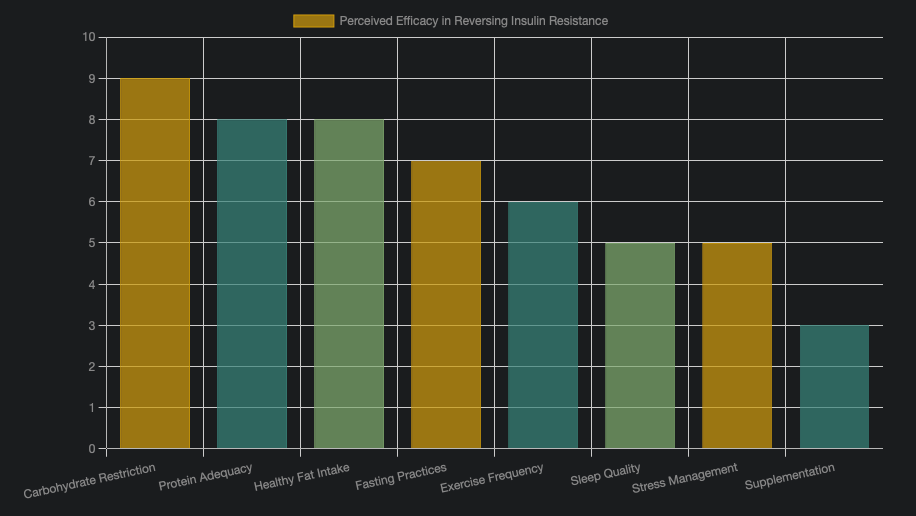
This bar chart highlights the primary importance Dr. Bikman places on carbohydrate restriction, followed closely by adequate protein and healthy fat intake. Other lifestyle factors like fasting, exercise, sleep, and stress management are also important, though perhaps seen as complementary to the foundational dietary changes. Supplementation is generally considered less impactful than the core lifestyle modifications.
Summary of Dr. Bikman’s Contributions
Dr. Benjamin Bikman stands as a formidable voice in the metabolic health landscape. His unwavering focus on insulin resistance as a central etiological factor for a vast array of chronic diseases provides a unifying framework for understanding and addressing modern health challenges. Through his extensive research, impactful books, and active media presence, he empowers individuals with knowledge and practical tools to take control of their metabolic destiny. His emphasis on dietary strategies, particularly carbohydrate restriction and adequate protein and healthy fat intake, offers a clear, actionable path toward improved insulin sensitivity and overall well-being. While scientific discourse continues to evolve, Dr. Bikman’s contributions undeniably serve as a pivotal guide for those seeking to understand and reverse the tide of chronic metabolic illness.
Frequently Asked Questions
What is insulin resistance, according to Dr. Benjamin Bikman?
According to Dr. Bikman, insulin resistance is a condition where the body’s cells become less responsive to the hormone insulin. This forces the pancreas to produce more insulin to maintain normal blood sugar levels. He posits that this state of chronically elevated insulin is a primary driver of numerous chronic diseases, not just diabetes.
What dietary changes does Dr. Bikman recommend for improving metabolic health?
Dr. Bikman advocates for a low-carbohydrate, moderate-protein, and high-healthy-fat diet. This approach aims to keep insulin levels low and stable, thereby encouraging the body to burn fat for energy and improve insulin sensitivity. He emphasizes whole, unprocessed foods and advises limiting refined carbohydrates and sugars.
Can insulin resistance affect conditions other than diabetes and obesity?
Yes, Dr. Bikman strongly argues that insulin resistance is linked to a wide range of chronic conditions, including heart disease, Alzheimer’s disease (which he sometimes refers to as “type 3 diabetes”), Polycystic Ovary Syndrome (PCOS), migraines, and potentially even multiple sclerosis, due to its pervasive impact on cellular function and inflammation.
What are Dr. Bikman’s most notable books?
Dr. Bikman has authored two influential books: “Why We Get Sick: The Hidden Epidemic at the Root of Most Chronic Disease—and How to Fight It,” which explains the science of insulin resistance, and “How Not to Get Sick: A Cookbook and Guide to Prevent and Reverse Insulin Resistance, Lose Weight, and Fight Chronic Disease,” which provides practical dietary strategies and recipes.
What is “The Metabolic Classroom”?
“The Metabolic Classroom” is a podcast hosted by Dr. Benjamin Bikman where he discusses various aspects of metabolism, energy regulation, and the scientific basis of chronic diseases, offering in-depth insights into improving metabolic health.
Conclusion
Dr. Benjamin Bikman’s research and advocacy have significantly shaped our understanding of metabolic health, emphasizing the central role of insulin resistance in chronic disease. His compelling arguments for dietary modification, particularly the reduction of carbohydrates and increased intake of protein and healthy fats, provide a powerful framework for individuals seeking to reclaim their health. By focusing on root causes rather than symptoms, Dr. Bikman empowers a proactive approach to well-being, underscoring the profound impact of daily choices on long-term vitality.
Recommended Further Exploration
- How does a ketogenic diet impact insulin sensitivity?
- The role of fasting in reversing insulin resistance
- Understanding the connection between insulin resistance and Alzheimer’s disease
- Practical tips for reducing dietary carbohydrates
Referenced Search Results
podcasts.apple.com
The Metabolic Classroom with Dr. Ben Bikman – Apple Podcasts
insuliniq.com
Insulin IQ: Dr. Benjamin Bikman’s Platform for Metabolic Health
cell.byu.edu
Benjamin Bikman – Cell Biology & Physiology – BYU
amazon.com

How Not to Get Sick: A Cookbook and Guide – Amazon.com
jordanharbinger.com
Benjamin Bikman | Insulin Resistance Is Killing Half of America | Jordan Harbinger
theselfhelplibrary.com
Dr. Benjamin Bikman Discusses Insulin and Metabolic Disease Risks …
drhyman.com
Reversing Chronic Disease And Aging By Fixing Insulin …
ihmc.us
Benjamin Bikman – IHMC | Institute for Human & Machine Cognition
youtube.com
95: Seed Oils and Insulin Resistance: What the Science …
foundmyfitness.com
Dr. Ben Bikman: How To Reverse Insulin Resistance …
redpenreviews.org
Why We Get Sick expert review • Red Pen Reviews
barnesandnoble.com
localpartnershipjointmarketsolutions.com
Transform Decision-Making with Ithy AI Solutions
benbikman.com
fu-xu-ry.com
Chelsea and cole itzy ritzy shop diaper bag
magazine.byu.edu
BYU Experts Offer Three Dieting Frameworks
gethlth.com
About Dr. Bikman, The HLTH Code Complete Meal Purpose
centricglobalsolutions.com
reddit.com
r/keto on Reddit: Benjamin Bikman controversial? Any thoughts on this RedPenReviews
jewishfoodhero.substack.com
Decoding Insulin Resistance: Interview with Dr. Benjamin Bikman
itechnologyllc.com
Information Technology — iTechnology LLC
allurepinecrest.com
Itzy ritzy teething necklace target top
shortform.com
520. Is Your Diet Killing You? | Dr. Benjamin Bikman Podcast Summary …
speeches.byu.edu
Benjamin Bikman | BYU Speeches
ihmc.us
STEM-Talk: “Why We Get Sick” author Ben Bikman on …
worldlinkmedical.com
Benjamin Bikman, Ph.D | WorldLink Medical
researchgate.net
Benjamin Bikman’s research works | Brigham Young …
podcasts.apple.com
520. Is Your Diet Killing You? | Dr. Benjamin Bikman
stevenbartlett.com
Copy of DOAC – Benjamin Bikman – independent research
morozkoforge.com
Ben Bikman Interview: Mitochondrial Health
getcurex.com
How Iodine Interacts with Weight Loss Medications
whois.com
cell.byu.edu
x.com
Benjamin Bikman (@BenBikmanPhD) / X
freckleschildrensboutique.com
Itzy Ritzy Itzy Ritzy – Boss Diaper Bag Backpack: Black Herringbone
researchgate.net
Benjamin BIKMAN | PhD | Brigham Young University, Provo | BYU | …
shows.acast.com
Drugs for Cardiovascular Health with Dr. Ben Bikman – The Metabolic …
itzycoboutique.com
Wrangler diaper bag — Itzy & Co. Boutique
ormolu-design.com
Ormolu-Design – Antiques, Home Decor, Vintage Goods, Interior Design
zivli.com
Why We Get Sick with Dr. Benjamin Bikman – Zivli
scholar.google.com
dailywire.com
Sessions | Dr. Benjamin Bikman [DW+ Exclusive] – The Daily Wire
x.com
pmc.ncbi.nlm.nih.gov
Successful treatment of obesity and insulin resistance via …
podcasts.apple.com
104 Dr. Ben Bikman: How To Reverse Insulin Resistance …
pubmed.ncbi.nlm.nih.gov
A high-carbohydrate diet lowers the rate of adipose tissue …
podwise.ai
520. Is Your Diet Killing You? | Dr. Benjamin Bikman | The …
benbikman.com
Dr. Bikman on metabolic health for reducing chronic disease.
dxtalks.com
Ithy AI: The Future of Intelligent Systems | Features & Use Cases
amazon.com
Why We Get Sick: The Hidden Epidemic at the Root of Most Chronic …
lowcarbhealthmd.com
Low Carb Health Doctor | LCHD – Dr. Benjamin Bikman, PhD
Last updated September 11, 2025